

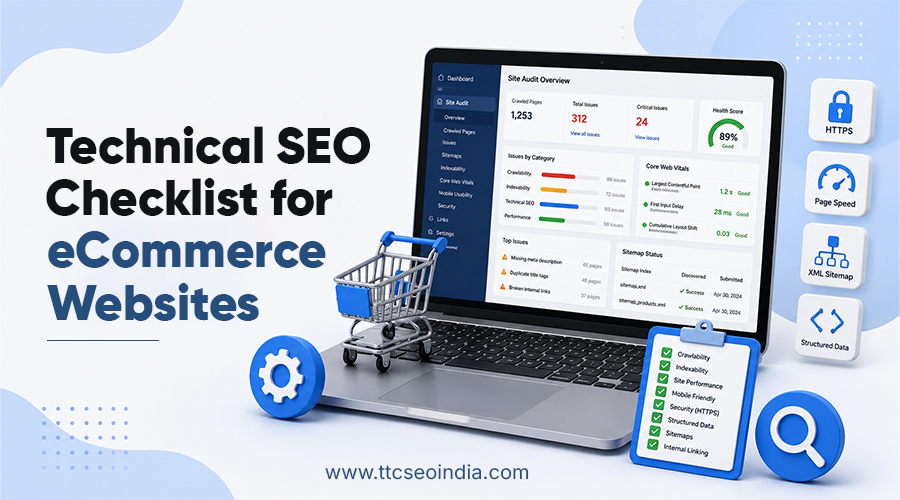
Your product pages are perfect. Still zero traffic. Sounds familiar? Here’s the uncomfortable truth. Google can’t rank what it can’t crawl properly, and most stores never even check.
That’s the gap that right eCommerce SEO services in India actually close- not content, not backlinks, just fixing what’s broken under the hood first.
Get this technical SEO checklist right, and your existing pages start pulling their weight.
This blog covers how you can do this all by yourself or take the help of an eCommerce SEO specialist in India.
12 Core Steps to Set Up E-Commerce Websites
Crawlability and indexation:
If Googlebot can’t reach a page, it doesn’t exist in search results. What do you need to do about it? The answer is simple. Evaluate your Google Search Console report every week. Fix the crawl errors. And lastly, check whether your category and product pages are blocked by robots.txt. If it is blocked, take steps to unblock it.
Site Architecture and URL Structure:
Flat architecture beats deep folders. Create an architecture in which customers or bots can reach their destination within just 3 clicks or even fewer. Clean URLs without random parameters can also help. It’s usually the first fix clients demand of an eCommerce specialist to improve rankings.
Core Web Vitals and Page Speed:
Largest Contentful Paint, interaction delay, layout shift- Google measures all three. Slow product pages drive customers and cause potential clients to leave. So, focus on compressing images, lazy loading the fold, and trimming the scripts.
Structured Data and Schema Markup:
A good product schema pulls in star ratings, price, and stock status right in the search results. Search listings with rich schema can get about 58% more clicks than plain listings. Add products. Assess reviews and feedback. Sort out the issues and then push for the BreadcrumbList schema. Check everything in Google’s Rich Results tool before going live.
Faceted Navigation and Filters:
This issue looks minimal, but it can wreak havoc on large catalogs. Make a single category with filters for colors, size, price, and brand. An easy yet effective step can increase the crawling rate by about 35%. Block the junk combos and keep the ones people actually search for.
Canonical Tags and Duplicate Content:
Product variants, print-friendly pages, and tracking parameters all create duplicates. Pick one canonical URL per product and point every version at it. Skipping this step means two of your own pages end up fighting with each other instead of one page actually winning.
XML Sitemaps and Robots.txt:
Keep your sitemap updated automatically and submit it to Search Console. Don’t let it list pages that 404 or redirect. Robots.txt should block admin folders and internal search results, but never accidentally block CSS, JS, or the pages you actually want to rank.
Internal Linking:
Don’t just rely on the nav menu. Link from your strongest category pages down to new or struggling products and drop contextual links inside blog posts, too. Some of the best SEO experts in India treat internal links as a free ranking boost, which many other stores never actually bother using properly.
Mobile and HTTPS:
Google looks at your mobile first site design. So, test the design properly on your device first, not just on dev tools. This is essential, as nearly three-quarters of all eCommerce site traffic is generated through mobile devices. HTTPS has become non-negotiable today. Include it everywhere, not only on the pages people actually see and pay for.
International SEO (hreflang):
Selling in more than one country? Hreflang tags tell Google which page to show which visitor, so your US and UK versions stop competing with each other. Get the reciprocal tags wrong, though, and neither version ranks well, or the wrong country page shows the wrong shoppers entirely.
JavaScript Rendering:
If your product listings load through React or Vue, don’t assume Googlebot sees what you see. Use server-side rendering for anything that matters, then check the actual rendered HTML in Search Console’s URL Inspection tool. Trusting it blindly is how whole product ranges quietly vanish from search.
Security Optimization:
One hack and months of ranking work can be spoiled overnight. Sites flagged as compromised have lost close to 95% of their organic traffic in the first week alone. Keep plugins patched, run a firewall, monitor your Search Console alerts, and never lose your security terms or delay them until the last phase.
AI and Answer Engine Optimization:
Shoppers are now getting answers directly from Google’s AI Overview, before they even reach a website. Reliable eCommerce SEO services in India. Monitor this carefully. They provide direct answers to the questions people ask most often in their first few sentences. And focus on earning trusted links or citations for your website. These checks increase your organic clicks by around 35%.
A Practical Case of TTC SEO India
“I remember this one call clearly”, says Pritha Gupta, SEO team lead at TTC SEO India. “The client had been running his store for almost two years, and he’d just gone through this whole SEO agency vs. freelancer confusion before he even got to us. He’d hired a freelancer first because it was cheaper, and honestly, for a few months, it seemed fine. Then things just started slipping- traffic, ranking, sales, conversions- all of it.” “He told me sales had dropped close to 90% over about three months, and nobody could tell him why. Turned out the freelancer had blocked half the site in robots.txt during some ‘cleanup’ and never checked Search Console after. Classic mistake, but an expensive one for him.” When he came to us, we started with fixing the crawl blocks and cleaning up canonicals, and within about 4 months, his organic traffic was back. He still messages me and says thanks, which honestly helped to put more effort into other projects.”
Final Thoughts
Technical SEO isn’t that glamorous, but it’s the difference between a store that ranks and one that quietly disappears from search. Most of these fixes take days, not months. If your checklist feels overwhelming, TTC SEO India can handle it exactly as it does for other prominent eCommerce brands across categories, and audit your site before you spend another rupee on content or ads.